
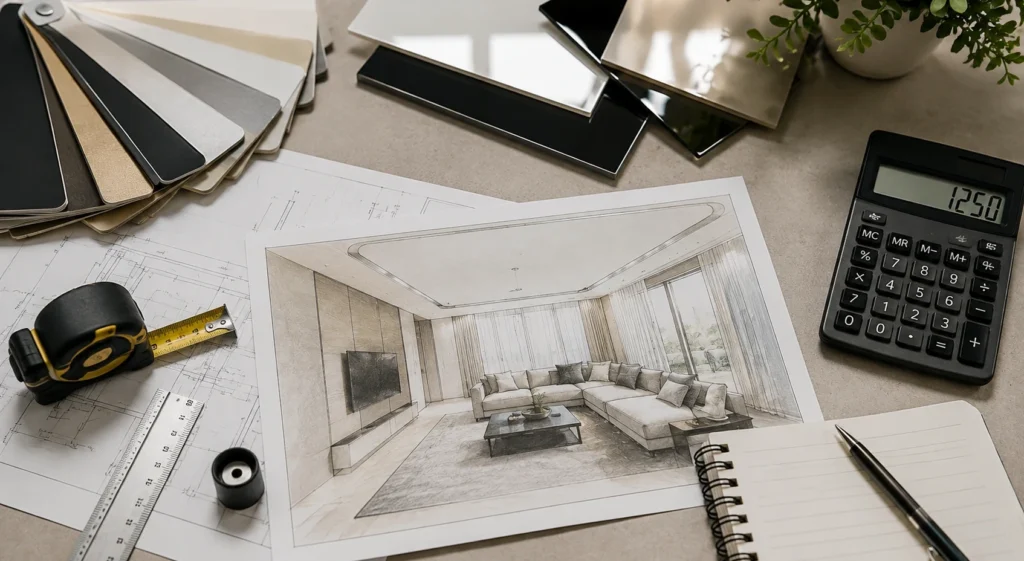
If you are considering a stretch ceiling, one of the first questions is usually about price. How much does a stretch ceiling cost in the UK?
There is no single price that applies to every project. A simple stretch ceiling and a bespoke multilevel design with integrated lighting are very different installations.
Room size matters, but it is only one factor. The chosen ceiling system, lighting, shape and complexity can all affect the final cost.
Therefore, the most accurate way to determine the price is to assess the individual project.
In this guide, we explain what influences stretch ceiling costs and what to consider when planning your budget.
What Determines the Cost of a Stretch Ceiling?
Stretch ceilings are bespoke systems. Therefore, the final price reflects the individual requirements of the room and design.
Several factors can influence the overall cost:
- room dimensions;
- ceiling shape;
- chosen material and finish;
- number of corners;
- lighting requirements;
- multiple ceiling levels;
- acoustic requirements;
- technical elements;
- installation complexity;
- bespoke design features.
A straightforward ceiling will usually require less work than a complex architectural installation.
However, size alone does not determine the final price.
Let’s look at the main factors in more detail.
1. Size of the Room
Room size is naturally an important consideration.
A larger ceiling requires more material. In addition, installation across a larger area may require more time.
However, comparing projects only by square metre can be misleading.
A large rectangular room with a simple ceiling may be easier to complete than a smaller space with numerous corners, lighting features and complex geometry.
Therefore, dimensions provide only the starting point for an estimate.
2. Ceiling Shape and Room Layout
Not every room is a simple rectangle.
Bay windows, alcoves, columns and unusual wall layouts can make the ceiling geometry more complex. As a result, additional planning and installation work may be necessary.
The number of corners can also influence the project.
A straightforward room generally allows for a simpler installation. In contrast, an irregular space may require more detailed preparation.
This is why two rooms with a similar floor area can have different ceiling costs.
3. Type of Stretch Ceiling
The type of ceiling you choose can have a significant impact on the overall budget.
A simple stretch ceiling creates a clean and refined surface. However, more advanced systems introduce additional materials, components and installation requirements.
For example, a Multilevel Ceiling uses different heights to create architectural depth. This requires more detailed design and construction than a standard flat ceiling.
Similarly, specialist acoustic or perforated systems have different requirements.
Therefore, the ceiling type should always form part of the initial cost discussion.
4. Integrated Lighting
Lighting is one of the most popular ways to personalise a stretch ceiling.
Standard light fittings can often become part of the design. However, more elaborate lighting concepts require additional planning and components.
For example, Linear Lights Ceilings integrate LED lines into the ceiling composition. These lines can form simple arrangements or more complex geometric patterns.
The quantity and configuration of lighting will influence the project cost.
Moreover, electrical requirements should be considered during the planning stage. This helps ensure that the lighting and ceiling work together correctly.
5. Starry Sky Ceiling Features
A Starry Sky Ceiling is a highly decorative solution designed to create a distinctive atmosphere.
Naturally, this type of installation differs from a simple stretch ceiling.
The number of illuminated points, overall layout and complexity of the desired effect can all influence the project.
For example, a subtle star field requires a different design from a detailed feature ceiling created for a home cinema or entertainment room.
Therefore, Starry Sky Ceilings require an individual quotation based on the intended result.
6. Multilevel Ceiling Designs
Multiple levels can completely transform an interior.
They allow designers to introduce depth, define different areas and integrate lighting into the architecture.
However, additional levels also increase the complexity of the ceiling.
More profiles, transitions and installation details may be required. Consequently, a multilevel ceiling will have different cost considerations from a straightforward single-level system.
The final design determines how much additional work is involved.
7. Acoustic Requirements
Acoustic comfort is important in both residential and commercial interiors.
Rooms with many hard surfaces can produce noticeable echo and sound reflections. Therefore, some projects require a specialist acoustic solution.
Acoustic Ceilings can help manage sound behaviour within a space when the correct system is selected.
Similarly, Perforated Ceilings can combine acoustic performance with distinctive visual design.
These specialist requirements can influence the overall project cost. However, they also provide functionality that a standard decorative ceiling may not offer.
8. Material and Finish
The chosen finish also contributes to the final appearance and cost of a stretch ceiling.
Different ceiling systems can provide different visual effects. The appropriate choice depends on the interior and desired result.
For many homeowners, a clean and understated finish is ideal.
Others may want the ceiling to become a prominent architectural feature.
Therefore, material selection should consider both appearance and practical requirements rather than price alone.
9. Existing Ceiling Condition
One advantage of a stretch ceiling is that it creates a new surface beneath the existing ceiling.
This means cosmetic imperfections above the new surface can often remain hidden.
For example, an existing ceiling may contain cracks, uneven areas or previous repairs. A conventional renovation could involve preparation, repair and redecoration.
A stretch ceiling takes a different approach by introducing a new finished surface below it.
However, installers still need to assess the existing structure before work begins. Any underlying issues that affect safety or installation must be considered separately.
10. Technical Elements and Services
Modern ceilings often contain much more than lighting.
Depending on the property, the ceiling area may also include ventilation, detectors and other technical components.
These elements need to work correctly with the new ceiling.
Therefore, their number, position and installation requirements can influence the complexity of the project.
Planning them early also helps achieve a cleaner final appearance.
Is a Stretch Ceiling More Expensive Than Plasterboard?
This is one of the most common questions homeowners ask.
However, comparing only the initial price does not provide the full picture.
A plasterboard ceiling and a stretch ceiling use different materials and installation methods. They also offer different design possibilities.
A conventional plasterboard project may involve framing, boards, finishing and decoration. Meanwhile, a stretch ceiling creates its finished surface using a tensioned membrane system.
The complexity of each project can vary significantly.
Therefore, neither solution is automatically cheaper in every situation.
If you are comparing the two options, read our guide to Stretch Ceilings vs Plasterboard for a more detailed look at their differences.
Should You Choose the Cheapest Stretch Ceiling Quote?
Price matters, but it should not be the only consideration.
A stretch ceiling is a finished architectural element that can remain part of your interior for many years. Installation quality is therefore important.
When comparing quotations, consider what each proposal actually includes.
For example, check the ceiling specification, lighting requirements, installation scope and any bespoke features.
A cheaper quotation may not always represent the same system or level of work.
Therefore, comparing like for like is essential.
How Can You Keep a Stretch Ceiling Project Within Budget?
Good planning is one of the best ways to control costs.
Start by deciding what matters most.
If your main goal is simply to achieve a smooth ceiling, a straightforward design may be enough.
However, if architectural lighting is important, include it from the beginning. Adding major design features later can make planning more complicated.
You can also prioritise where you invest.
For example, a dramatic ceiling might make sense in the main living area. Meanwhile, secondary rooms could use simpler solutions.
This approach allows the budget to focus on the areas where the ceiling will have the greatest impact.
Is a Stretch Ceiling Worth the Investment?
Value depends on what you want from the project.
If you simply need a conventional painted ceiling, traditional construction may provide everything you require.
However, stretch ceilings become particularly interesting when design flexibility matters.
They can conceal an imperfect existing surface, integrate lighting and create architectural features. Moreover, specialist systems can address acoustic requirements or introduce unique visual effects.
Therefore, the value is not only in the ceiling surface itself.
It is also in what the system allows you to achieve with the entire interior.
How Do You Get an Accurate Stretch Ceiling Price?
The best way to determine the cost is to start with the actual space.
Room dimensions provide useful information, but photographs, ceiling height and design requirements can also help.
Think about what you want before requesting an estimate.
Do you want a simple ceiling or a feature design? Will the project include integrated lighting? Are there acoustic requirements? Do you want multiple levels?
The clearer the brief, the easier it becomes to develop an appropriate solution.
After reviewing the project, a specialist can provide an estimate based on the actual requirements rather than a generic figure.
Frequently Asked Questions
How Much Does a Stretch Ceiling Cost per Square Metre in the UK?
The cost depends on more than the ceiling area. Material, room geometry, lighting and design complexity can all influence the final price. Therefore, an individual estimate provides a more useful figure than a generic square-metre rate.
Does Integrated Lighting Increase the Cost?
Yes. The type, quantity and layout of lighting can affect the overall project cost. More complex lighting designs generally require additional components and installation work.
Are Multilevel Ceilings More Expensive?
Multilevel systems require additional profiles, design work and installation details. Therefore, they generally involve more work than a simple single-level ceiling.
How Much Does a Starry Sky Ceiling Cost?
The price depends on the size and complexity of the design. The number of illuminated points and the desired visual effect can also influence the project.
Can I Get a Quote Before Choosing the Final Design?
Yes. An initial discussion can help establish your requirements and possible options. The design can then be refined before the final project specification is agreed.
Get a Stretch Ceiling Estimate for Your Project
Every interior is different. Therefore, the most useful stretch ceiling price is one based on your actual space and requirements.
At SV Ceiling, we develop bespoke solutions for residential and commercial interiors across the UK.
From clean minimalist ceilings to integrated lighting, multilevel designs and specialist acoustic systems, each project starts with understanding what you want to achieve.
Tell us about your space, dimensions and ideas. Our team can then help you explore the right ceiling solution and provide an estimate for your project.